Choosing a Replacement Engine: New, Remanufactured or Used
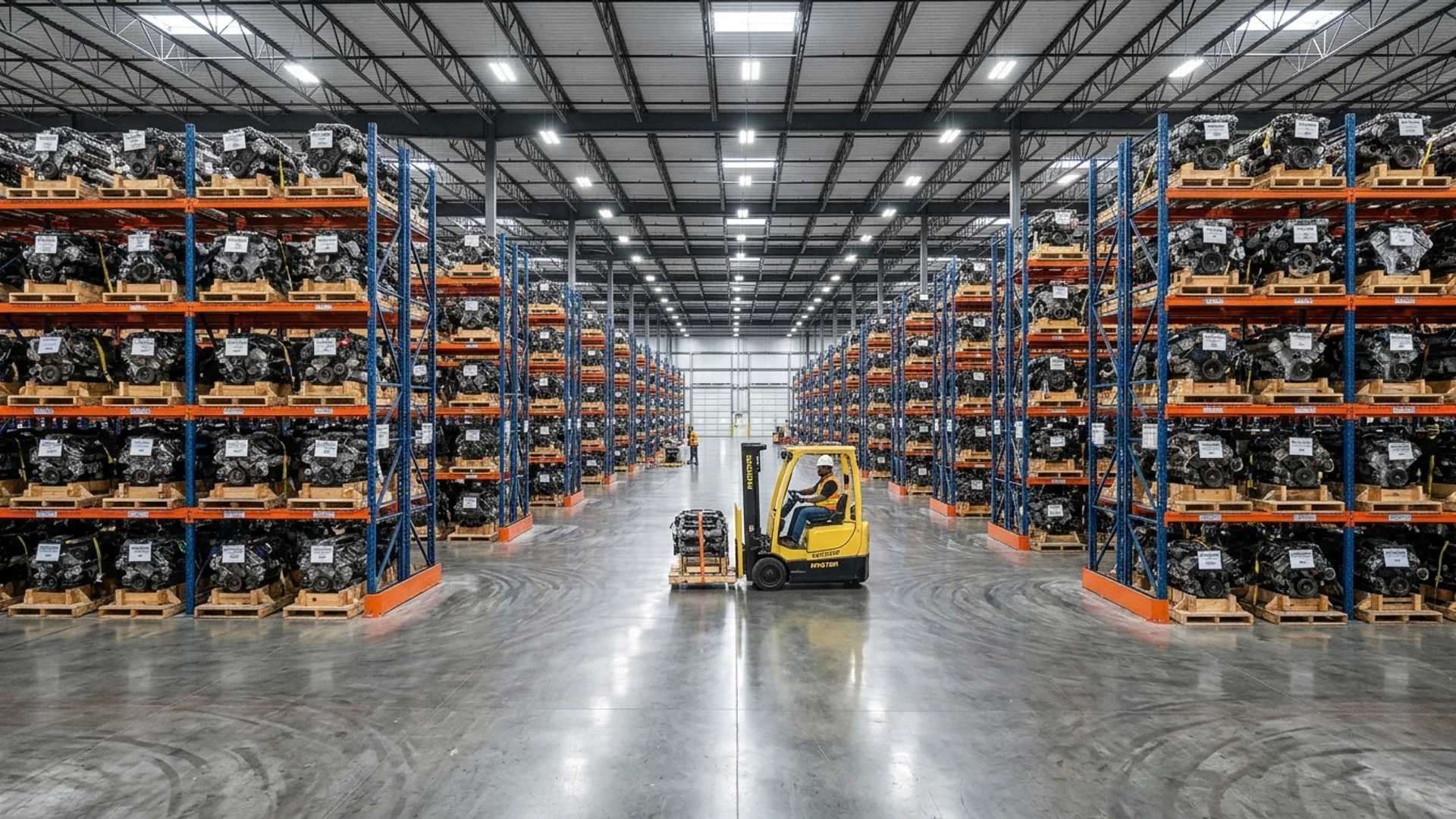
We keep engine inventory and ship engines throughout the United States. Call with your VIN to check availability, price, shipping and warranty terms.
Replacement Engines: What You Should Know
When an engine has a spun bearing, a cracked block or a failed timing system, replacing it is often faster and cheaper than rebuilding it. The hard part is choosing the right replacement. There are three main options: a new crate engine, a remanufactured engine, or a used engine from a donor vehicle. Each has different costs, expected life and warranty coverage. This page explains the differences and what to check before you buy. To ask about a specific engine for your vehicle, call with your 17-digit VIN so the exact engine code and configuration can be matched.
Common Symptoms & Warning Signs
Recognize these warning signs early to avoid catastrophic drivetrain damage.
Engine Will Not Turn Over (Seized)
The starter engages but the crankshaft will not rotate, often because bearings have seized after oil starvation.
Deep Knocking From the Bottom End
A heavy, rhythmic knock that rises with RPM usually points to a spun rod bearing. Continuing to drive can break a connecting rod.
Coolant in the Oil or Hydro-Lock
Milky oil, white exhaust smoke or a sudden stall can mean a cracked block or head. These failures often make replacement the practical choice.
Low Compression Across Several Cylinders
Worn rings, burned valves or scored cylinder walls cause misfires and power loss that a simple repair cannot fix.
How the Problem Is Diagnosed
We believe in data-driven diagnostics. Rather than guessing with expensive replacement parts, our technicians follow rigorous diagnostic protocols.
Confirm the Engine Has Actually Failed
Before buying a replacement, confirm the diagnosis with compression or leak-down testing, oil analysis or inspection. Some symptoms that sound terminal have cheaper causes.
Match the Exact Engine by VIN
The 8th digit of most VINs identifies the engine. Displacement, emissions package, variable valve timing and cylinder-deactivation hardware must all match your vehicle.
Compare Options and Total Cost
Compare the engine price plus installation, fluids, gaskets and any parts that should be replaced at the same time, such as the water pump and thermostat.
Get Warranty Terms in Writing
Warranty length, mileage limits and whether labor is covered vary widely by supplier. Read the terms before you buy.
Repair & Replacement Options
New Crate Engines
Brand-new engines, usually from the vehicle manufacturer or a major supplier. Highest upfront cost; availability depends on the engine.
Remanufactured Engines
Rebuilt in a production facility with new wear parts and updated components. Often a good middle ground between new and used. See our new and remanufactured engines page.
Used Engines
Taken from a donor vehicle. Lowest upfront cost, but condition depends on the donor's history, so documentation matters. See our used engines page.
Installation
If you need the engine installed, ask about installation when you call. Our engine replacement page explains what a proper installation includes.
Repair vs. Rebuild vs. Replacement Decision Guide
If there is metal debris in the oil or a spun bearing, replacement is usually more dependable than repairing a contaminated engine. Confirm the diagnosis first.
Repair the Existing Engine
Best when damage is limited to external or top-end parts, such as a water pump, head gasket or timing components, and the bottom end is healthy.
Rebuild the Existing Engine
Worth considering when the block is sound and matching original numbers matters, as with classic or specialty vehicles.
Replace With Another Engine
Usually the most practical choice after a spun bearing, seized crank or cracked block, when internal contamination makes repair unreliable.
Common Vehicles & Powertrains Involved
Examples of vehicles where this work is commonly needed. Call with your year, make, model and engine to confirm we can help with your specific vehicle.
- • Chevy / GMC 5.3L and 6.2L V8 (Silverado, Sierra, Tahoe, Suburban)
- • Ford 5.0L Coyote, 3.5L and 2.7L EcoBoost (F-150, Expedition)
- • Ram 5.7L Hemi (1500)
- • Jeep 3.6L Pentastar (Wrangler, Grand Cherokee)
- • Toyota 3.5L V6 and 5.7L V8 (Camry, Highlander, Tundra)
- • Honda 2.4L and 3.5L (Accord, CR-V, Pilot)
- • Nissan 3.5L VQ (Altima, Pathfinder)
- • Hyundai / Kia 2.4L and 2.0L Turbo
- • BMW 2.0L and 3.0L turbo
- • Mercedes-Benz 2.0L turbo and V6
- • Audi / Volkswagen 2.0L TSI
- • Work vans (Ford Transit, Chevy Express, Ram ProMaster)
- • Heavy-duty pickups (gas and diesel)
How the Process Works
Call With Your VIN
Have your VIN, mileage and a description of the failure ready.
Discuss the Options
We go through new, remanufactured and used options that fit your vehicle and budget.
Confirm Price, Terms & Delivery
Price, warranty terms and how you will receive the engine are confirmed before you commit.
Shipping or Installation
We ship engines nationwide to you or your mechanic, or ask about installation at our Texas workshops.
Frequently Asked Questions About Replacement Engines
Related Powertrain Services
What to know before buying a used engine.
Crate and remanufactured engine options explained.
What a proper engine replacement involves.
Confirm the engine has really failed before replacing it.
Search engine families by manufacturer, engine code, vehicle or category.
Call to Discuss Your Repair
Engine and transmission problems are easiest to explain by phone. Tell us your vehicle and symptoms (slipping, noises, warning lights) and we'll explain the likely next steps and how an estimate works.
Phone estimates are non-binding. You receive a written quote after inspection, and no work starts without your approval.
Warranty: Warranty coverage is available. Terms depend on the repair, part or engine and are stated in writing on your quote.
Towing: Towing is available. Ask about towing for your location when you call.