Signs Your Engine Needs to Be Replaced (Vs. Repaired)
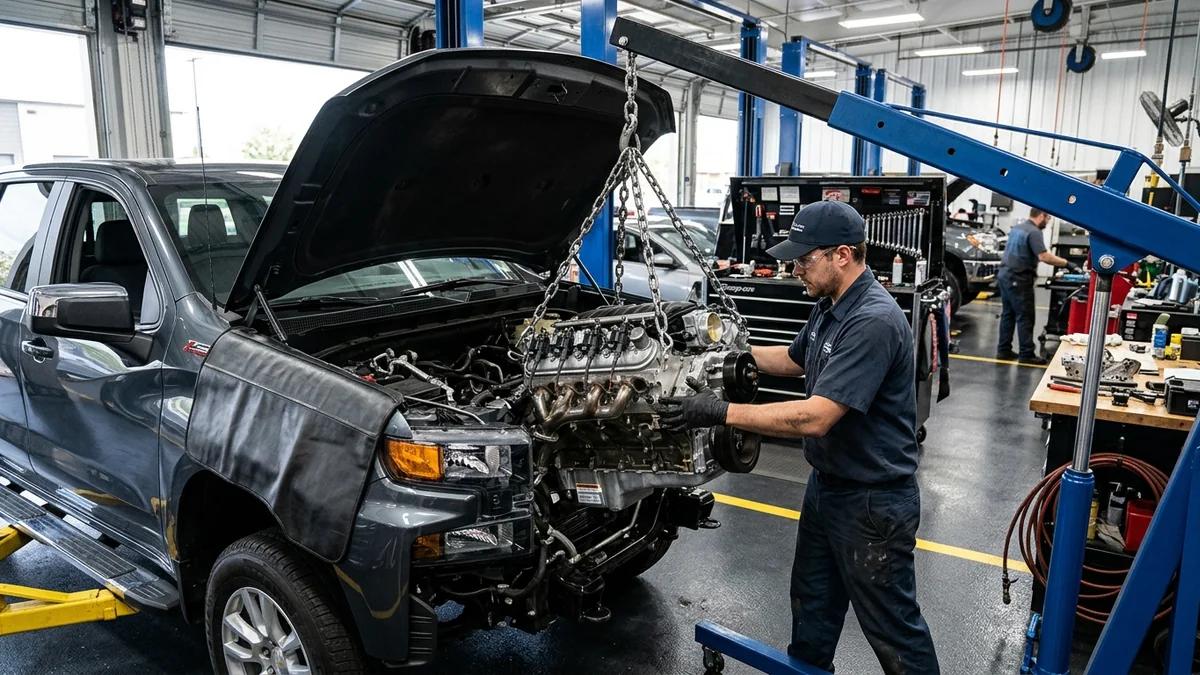 Representative image
The Critical Crossroads: Repair vs. Replace
Few moments in vehicle ownership are more daunting than learning your engine has suffered severe mechanical damage. When a shop recommends major repairs, you need to know with absolute certainty: *Can this engine be saved with targeted repairs, or is a complete replacement the only dependable choice?*
At Texas Engines & Transmission, we believe in honest mechanical diagnostics backed by borescope photos, oil pressure data, and compression readings. Here are the definitive signs that indicate an engine requires replacement.
---
Catastrophic Signs That Warrant Engine Replacement
1. Severe Rod Knock (Spun Connecting Rod Bearings) A heavy, rhythmic, metallic pounding noise coming from the bottom of the engine that accelerates with throttle RPM is classic **rod knock**. This occurs when the thin babbit-metal bearing shell between the connecting rod and the crankshaft crankshaft journal starves of oil, overheats, and spins. Once a bearing spins, it out-of-rounds the connecting rod, scores the crankshaft beyond machining limits, and sends abrasive brass shavings through every oil gallery in the engine.
2. Thrown Connecting Rod (Windowed Block) When a connecting rod suffers catastrophic fatigue, it snaps in two. At 3,000 RPM, the severed rod acts like a battering ram, punching a physical hole right through the aluminum or iron engine crankcase. Once the structural block is fractured, the engine cannot be repaired and must be replaced.
3. Cracked Engine Block or Cylinder Liner Severe overheating or freezing without proper coolant can cause thermal stress fractures in the cylinder block casting. Cracks often develop between water jackets and cylinder bores or between valve seats. Once a block is cracked, coolant continuously leaks directly into the combustion chamber or mixes into the oil pan.
4. Heavy Metal Slurry Throughout the Lubrication System When an internal component (like a camshaft lobe, lifter roller, or crankshaft journal) self-destructs, it grinds itself into thousands of microscopic razor-sharp steel particles. This metallic sludge circulates through the entire engine, embedding itself into oil passages, variable valve timing phasers, turbochargers, and cylinder walls. In such cases, attempting to replace just one part will result in another failure within miles.
5. Pervasive Low Compression Across Multiple Cylinders If a compression test reveals that multiple cylinders have dropped below 90 PSI due to severely scored cylinder walls or cracked ring lands from severe detonation, the engine block requires full removal, cylinder boring, and oversized pistons. Often, replacing the engine with a zero-mile crate long block provides better longevity and a superior warranty at comparable cost.
---
When Can an Engine Be Safely Repaired? If your vehicle's issue is confined to: - A blown head gasket where the cylinder head is warped but not cracked - Stretched timing chains or shattered plastic timing guides - Worn intake or exhaust camshafts (common on GM AFM engines or Dodge HEMIs) - External oil leaks (valve covers, oil pans, rear main seals) - Water pumps, thermostats, or radiator failures
Then a targeted mechanical engine repair is the correct, cost-effective solution.
Experiencing These Symptoms on Your Vehicle?
Call to describe your vehicle's symptoms and ask about diagnosis and repair options.
Frequently Asked Questions
Call to Discuss Your Repair
Engine and transmission problems are easiest to explain by phone. Tell us your vehicle and symptoms (slipping, noises, warning lights) and we'll explain the likely next steps and how an estimate works.